New Ground – Older Women’s Co-Housing (OWCH)
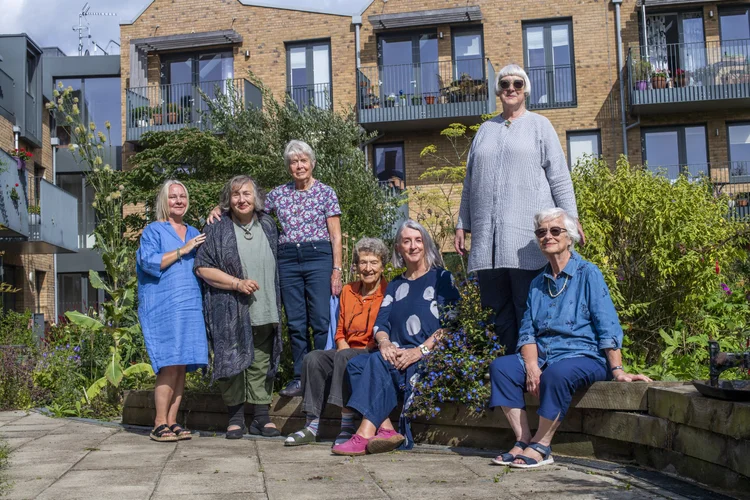
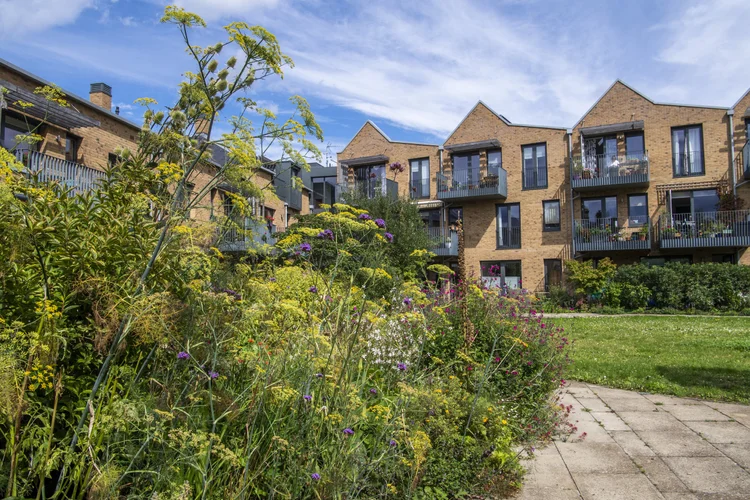
New ground is a group of women over fifty who have created their own community in a new, purpose-built block of flats in Barnet, North London.
Written by Tini Burns – CCH Older People’s Intern
‘DEAR OLD THINGS.’
These old ladies are just “…dear old things who don’t know what they want.”
OWCH.
But we shouldn’t say that. Not because it’s a misspelling. And not because the above quote sounds rather derogatory. We don’t need to say OWCH – or ouch even – because the quote comes from one of those ‘dear old things’, and it came with a definite sense of tongue-in-cheek.
These ladies are a part of an intentional community group once known as OWCH (surely one of the world’s great acronyms: and I say that as an avowed acronymophobic). It stood for Older Women’s Co-Housing. They have since rebranded themselves as New Ground. What they have achieved is new, even if the ideas are old and maybe slightly forgotten. The ground these ideas were implemented on and where these ladies now reside is new in the sense that it’s been repurposed, and it’s to be found just north of London in High Barnet.
It’s somewhere I know intimately. It’s old ground to me and I’ve definitely forgotten parts. I was made in this neighbourhood, so whatever’s in the water here is a part of me. I also returned to live here as a young adult, unbeknownst at the time that it was my very first neighbourhood.
And now: third time’s a charm as the ladies of New Ground did exactly that: charmed me. Not only with a generous invite into their community, but also with their ideas, their innovation and their fortitude.
The rebranding might be new, but the project I’d tailgated a visit to was comparatively old. It began back in 1998 when a research study about a senior cohousing initiative in The Netherlands was presented to a group of ladies in London by writer and a founding member of OWCH Maria Brenton. Also at the presentation was the then-director of Housing for Women, Elizabeth Clarson, who in 1999 came on board in a formal partnership. The Tudor Trust and Hanover Housing were also eventually brought into the fold, both with generous support. A site was found and in 2010 design began. They moved in eighteen years after that first coming together.
New Ground is the only example of its type in the UK: a housing initiative for women over the age of 50, women who were looking for an alternative to the somewhat status quo option of being sent to an old people’s home. They were the dears who “…didn’t want to be done to.” They were the dears who were now letting me into their home.
Which leads me nicely to the tailgating I’d committed. I’d reached out to Jude, a member of the community, and she suggested I come along to a visit from the Ministry of Housing, Communities and Local Government. Jude met me at the sole entrance to the site, where I was led into the communal area. Coffee, plates of chocolate snacks, and a jigsaw greeted me. I already felt at home.
Rachel joined us before the delayed Ministry delegates eventually turned up, and we had time to talk. I noticed how my studies in bioregional governance and its honouring of porous boundaries over artificial (i.e. masculine) borders piqued Rachel’s interest, and I wondered whether this was something New Ground had unwittingly connected with.
It was Rachel in fact who took us around the site. And what a site. It was airy, spacious and comfortable, but most importantly co-designed by the people who lived there, with an emphasis on “…sociable circulation spaces and the centrality of the Common House.”. It had what they needed. It was accessible, nowhere too slender to accommodate a wheelchair (just in case). These were homes for life, so there wasn’t a trip hazard to be seen. It was open, with windows facing corridors so residents could check on each other (just in case the worst should happen). Blinds were, of course, installed for privacy.
Even with few around at that time of day, it felt social. I could see how living here would keep you young. A 95-year-old lady was out because she’d gone to get a haircut. She still worked. She was one of what Jude called the ‘bookends’, being the oldest member. The youngest bookend was 60. New Ground was also obviously safe. Hilary had left her door open for us to peek inside. Hilary was nowhere to be seen but where in the UK apart from the depths of Cornwall or the heights of the Highlands can you leave your front door open?
It was the site that kept on giving.
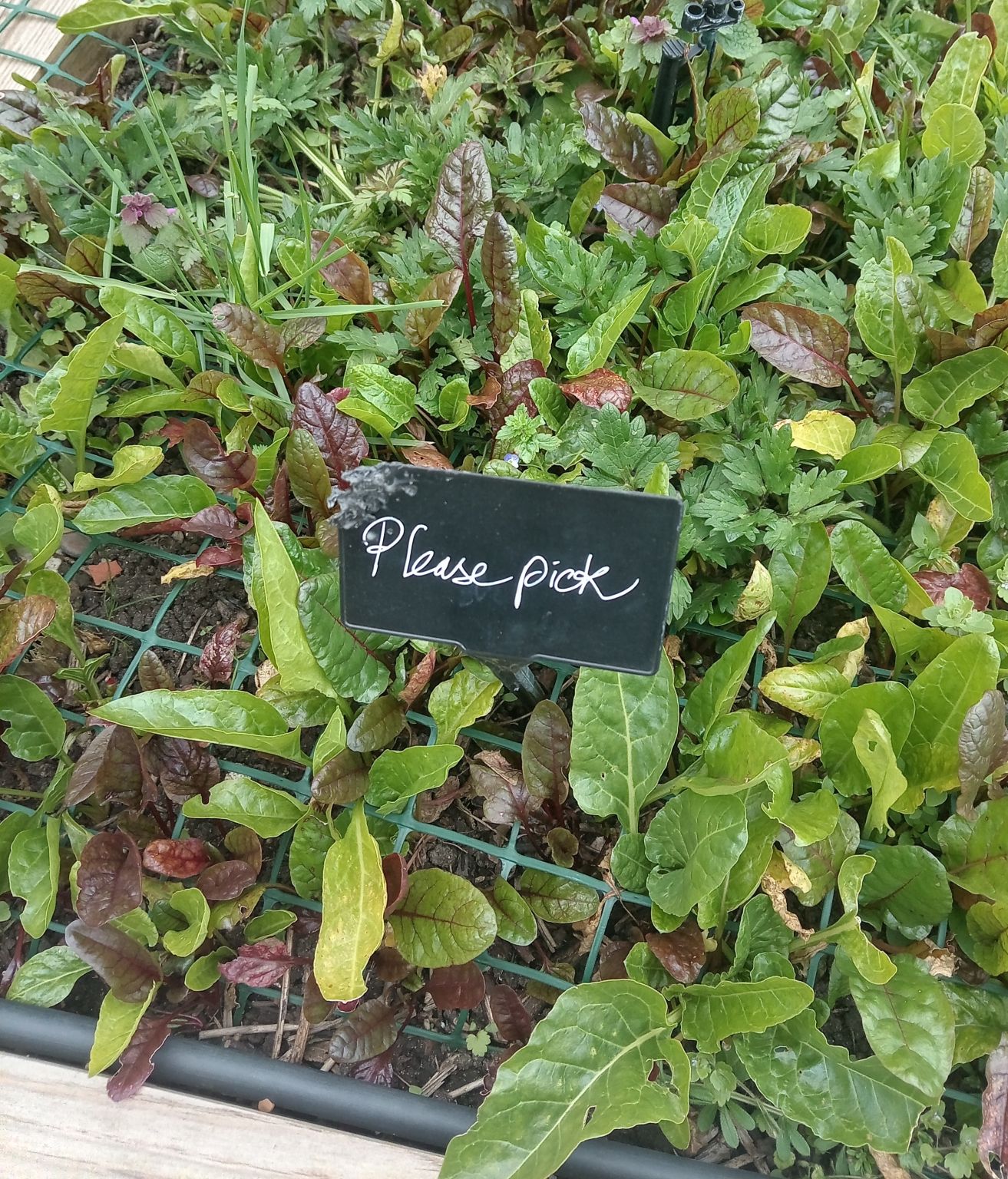
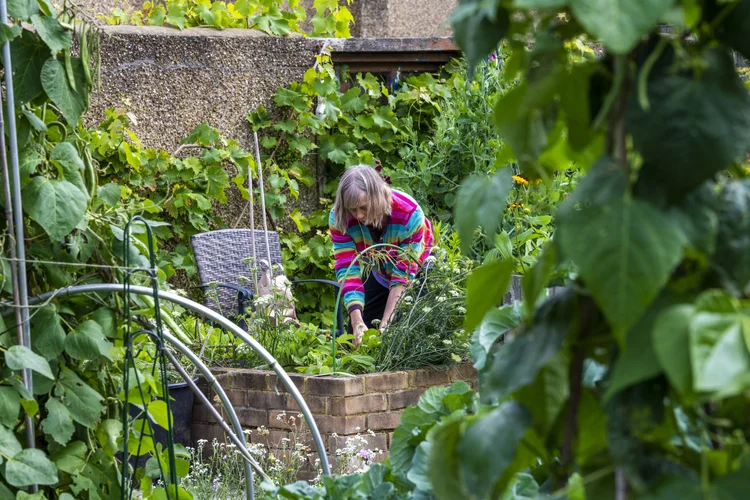
From the garden where the flats faced out to, an arch led into an orchard garden. Frances Hodgson Burnett would have felt right at home. There were more secrets to be discovered. A summer house had been converted from what had been a builder’s shed when the site was under construction. This meant during all seasons a resident could come out to potter in the allotment without having to dash back indoors when rain began. For many, there’s little dashing anywhere after a certain age. The whole allotment had once been the builders’ yard in fact, and it was a space that also took an equitable approach by having different plant beds at different heights. It was a nod to both sustainability and inclusion. The garden felt forward-thinking as the ladies had made the decision to have two wells dug into and under the lawn to catch the winter rains and therefore enable gardening in the summer.
There were car parking spaces, with carsharing encouraged. There were bike racks, though the bike shed itself now saw more action as a sheltered drying space for laundry as Rachel admitted that bicycles and ladies over a certain age weren’t the most natural of bedfellows. Cycling and London aren’t the most natural of bedfellows for anyone of any age.
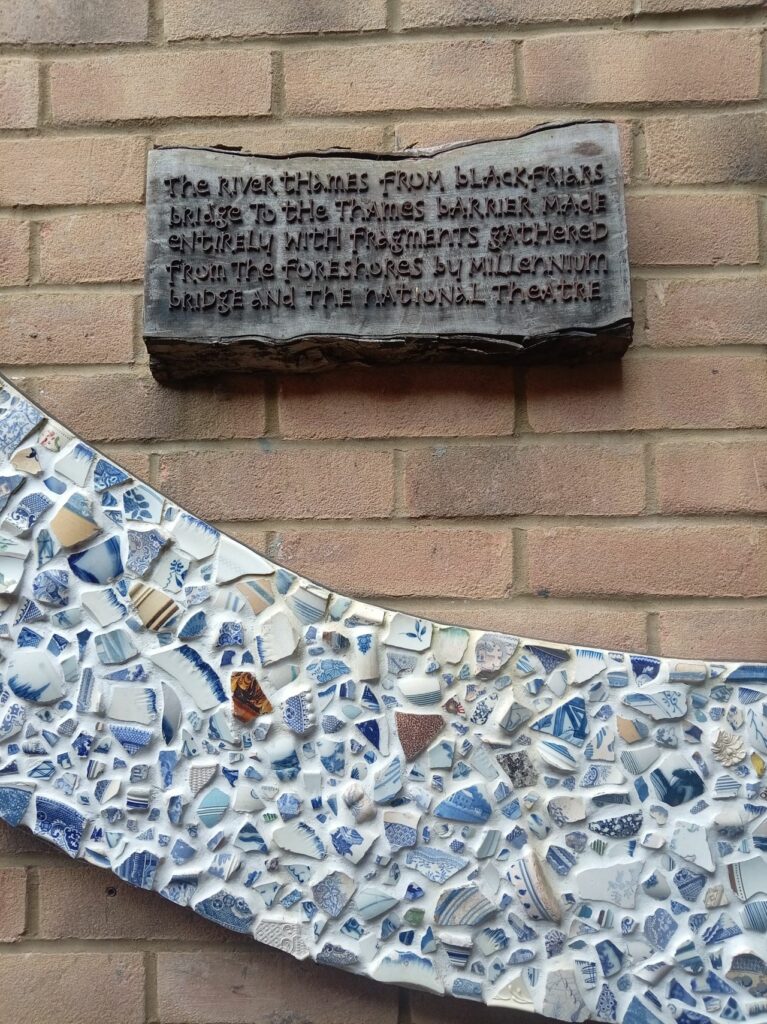
There were touches that were more personal around the site too, such as the tiled mosaic that we stood in front of and pondered for a while until Rachel explained its origin. The curve and sweep of it represented the meander of the Thames and every shard of blue-and-white crockery or tile that made the sculpture had been found by the ladies, including Rachel, as they’d walked along the foreshore of the river. “Back in your days as a mudlark,” I said knowing how London’s history is made by the people who once were. Rachel’s smile had the pride of a local in it. The sculpture had been created together. This was jigsawing taken to its own new ground. London began around the Thames, so it felt pertinent continuing the imagery out here.
There was so much to take in but at no point did one feel cluttered or overwhelmed.
And then – finally! I probably thought – there was also another male.
He entered the picture and rolled around the dirt for a bit, caught my eye and dared me to be jealous. He was so male he was even called Boy. Boy had slipped the net and now called this place home because he’d been brought in as someone’s pet cat. It did lead to an elephant in the room though, or rather the tomcat in the yard.
What did happen if a man wanted to visit?
OWCH is inclusive. To a point. The community conforms to Equality legislation, but OWCH has a valid argument as to why a women-only community was needed. In their eyes, justifiably, “…older men of the same era had not benefited from feminism’s awakening of gender consciousness and were still almost universally ‘unreconstructed’ in their views of male dominance and female subservience as a ‘natural relationship’.”
This did not mean men became social pariahs. There was a woman living there who had a husband. The husband did not live there. Stan came to visit every other weekend, and the community was happy to have him. It’s democracy in action as everything is voted for, with an 80% consensus as the vote threshold. I was told that “…if it’s some Latin hunk you’ve only known for ten days, the vote would probably go against you.”
These ladies are not college kids, after all. Which is not to say there’s a cut-off age for becoming friends with a Latin hunk, no matter how many days you haven’t known him for. Fairness is built into the community. 80% was decided upon because a) 100% never happens, and b) they’d otherwise be “…navel gazing until you were dead and buried.”
Their democracy works. Jude’s granddaughter had stayed for six months while their mother, Jude’s daughter, was ill. For a spell, the community had become intergenerational without meaning to be. This was a porous boundary at play, and I could see why Rachel had been interested in my dissertation ideas earlier. Even the idea that it could be seen as a gated community with that one lone entrance was dismissed when New Ground’s wider community benefits became apparent.
They gave to the community without, too. They were porous in this respect. Classes and events held on-site – from yoga to life-drawing – were open to those living in Barnet. Some of the ladies volunteered, either at the local cancer clinic the Cherry Lodge, or through educational theatre, or reading at schools, as Rachel herself did. Their sense of community went even further, as the guest room had been given to some Ukrainian refugees recently, and not for a short spell either.
Succeeding in all this had been a challenge, though. Jude handily summed up the three things needed to establish such a community: a central advice hub, forward funding, and sympathetic local planning. With regards to the Tudor Trust, there was a lady there who “… got the idea of cohousing.” This was all very simple, in Jude’s eyes, but she knew it was a simple plan lost in bureaucracy.
I could sense Jude’s frustration simmering below the calm demeanour. New Ground had suffered five Ministry visits in four years, and it was a repeat every time. They would turn up enthusiastic, with promises to take the idea back. Then: nothing. Awareness was acute around politicians who have their own agenda and the ever-revolving door of policy. (As an aside, I did think it interesting that none of the three Ministry delegates sent took a single note.)
But these ladies persisted, and then some. No thanks to the likes of Barnet Council, either. They were resistant from the off, with planning blockages to delay the whole scheme frequently implemented. This was possibly due to some kind of perverse Mallet’s Mallet at play. When ‘community housing’ is mentioned, a swift decline is often perceived from community to commune to hippies, then ne’er-do-wells, then drugs, before finally landing on freedom-stealing communists. Barnet Council have since done their own kind of tailgating by claiming to have supported and been integral to the site’s success, going so far as to even have a local councillor photobomb an event where New Ground were being celebrated. (They are, in fact, award-winning, having won the 2024 Bronze World Habitat Award for an innovative approach to senior living.)
These ladies should be celebrated. They are more than just a small community in a small pocket north of London. They are looking ahead. The rebrand came from wanting to take the word ‘old’ out of their title. Not only do I see these ladies as anything but old (with all the connotations that word comes with), but they want to “…encourage young women to walk with us as the future unfolds.” This proactive stance sits well with their decisive nature. The wells in the garden were a good example. “We can do it quickly because we decide. We as a community can make the decisions.” This is the power of autonomy in action. It taps into the tragedy of climate change, which is the very urgent nature of it; as well as the bioregional governance which I feel so passionate about.
This autonomy was refreshing to see in Barnet, and I can only marvel at and praise the community they have created for themselves.
They have a home, which is something we all crave. “You feel like you belong to something,” Jude told me. This boils down to being surrounded by people who have the same ethos as each other. Rachel mentioned their “…need to have a group of people who are like-minded, who signed up to a set of values.” I would rank this as important as the three things Jude signposted for such a community to exist. There had been the couple of refugee women. There was currently a lesbian couple there. On-and-off there was even a Stan, if not some nameless Latin hunk.
There was inclusion.
For a brief afternoon, I felt included.
Cohousing and community-living is an idea that’s simply not known to many. It doesn’t need to be normalised; it needs to be re-normalised. Community living is not a new idea, it’s just been drowned out by the messages of Government, individualism, social housing, Housing Associations, local authorities, and that ol’ devil capitalism.
People don’t know how much power they can have over their housing options. These ladies “…didn’t want to be done to.” They wanted ownership and through one hell of a slog and gauntlet ran, they achieved it.
Fortune-telling is a hoax because no one can see into the future. The usual outcome is the last one anybody thought of. However, sometimes we can see a glimpse a future that could be; and I mean a positive glimpse at that.
There is no such thing as a utopia. There can’t be. It literally means ‘no place’, an impossibility unless you live in a vacuum. New Ground, however, is the closest thing I’ve seen to it in all my travels. They have literally trodden new ground, just as I had travelled and trodden to Barnet under the aegis of Cwmpas, one of the ‘central advice hubs’ that Jude referred to. The ladies want this site to act as a flagship.
A flag needs someone to wave it and I’m happy to be on board as a standard bearer.